DES303 Week 1: Who I Am, What I Build, and Why It Matters
Introduction: My Design Philosophy
I'm going to be upfront about something: I don't think of myself as a traditional designer. I'm a problem-solver who happens to design. I study Design and Computer Science as a conjoint degree at the University of Auckland, and my approach to design has always been the same — if something in my life doesn't work, I build a tool to fix it. If that tool fixes my problem, chances are it can fix it for other people too.
That philosophy has led me to build a lot of things over the past few years: apps, websites, games, even a physical kiosk. But the thread that connects all of them is a question I keep coming back to: how can I help people — including myself — become happier, more connected, and more able to achieve their goals?
Coming into DES303, I want to use this course to push beyond purely software-based work. I've spent a lot of time building apps and websites, and with the help of AI tools, I can ship digital products fairly quickly. But I want to challenge myself with something more physical, more tangible — maybe hardware, maybe interactive installations, maybe something I haven't thought of yet. This course is the space to experiment before locking in my Capstone direction.
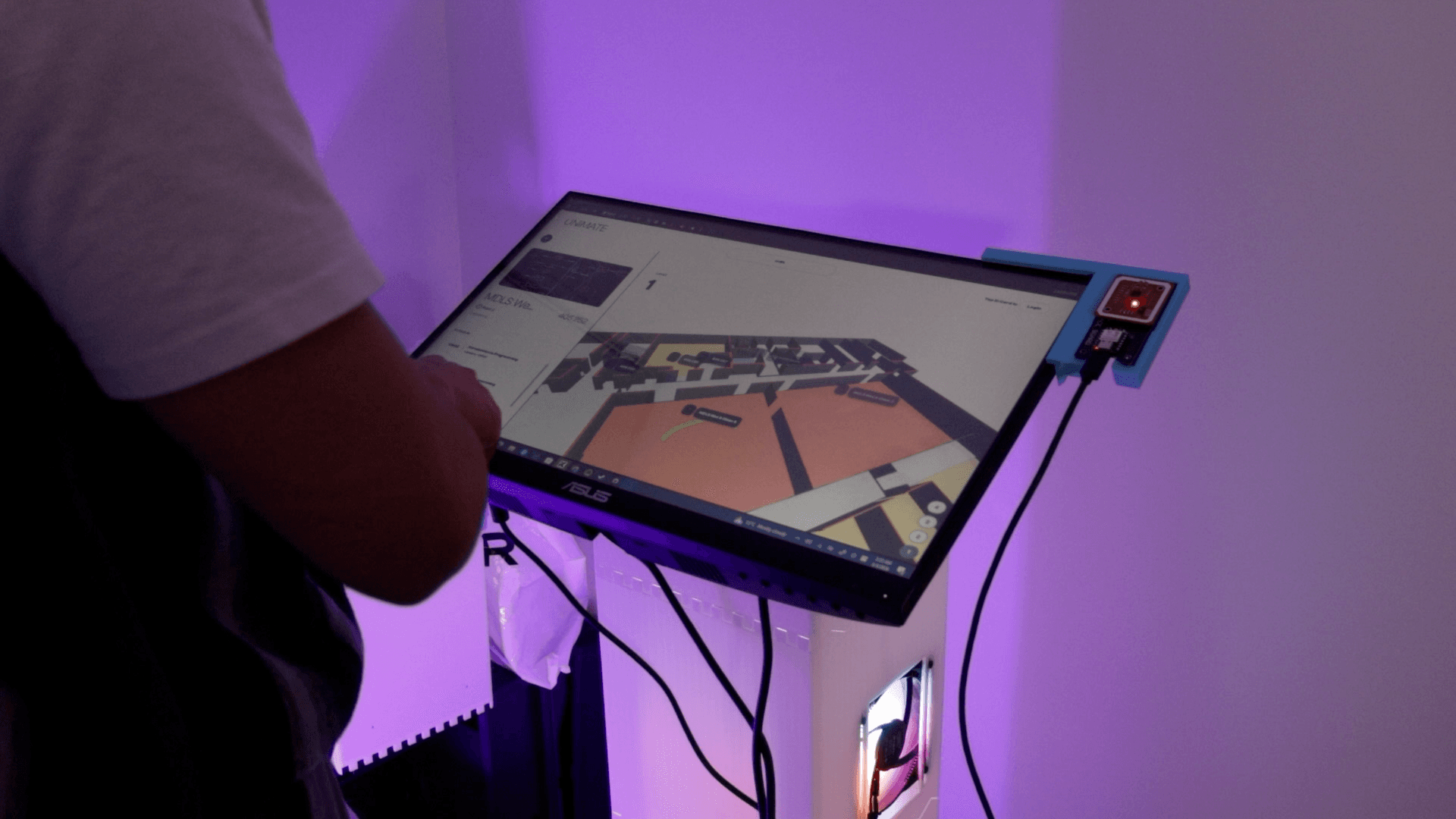
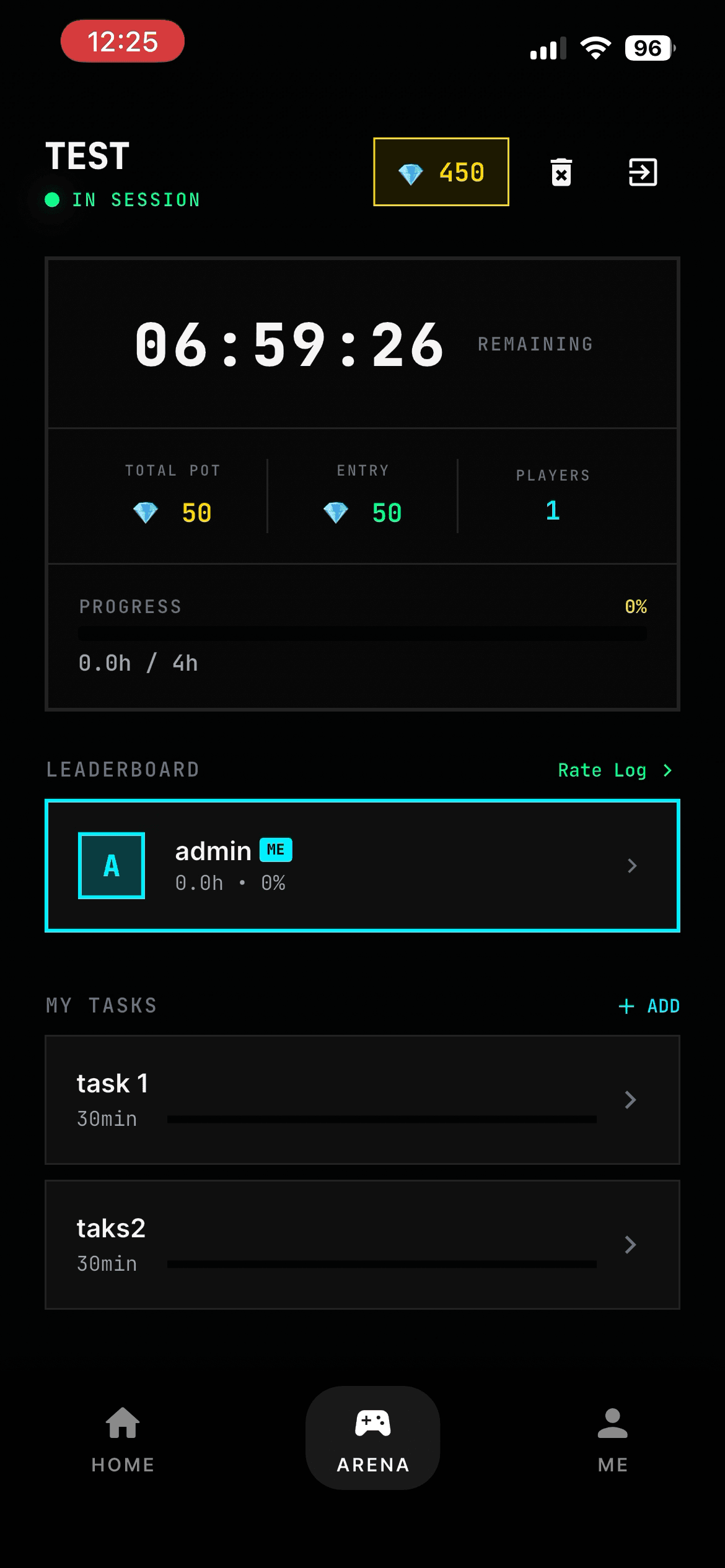
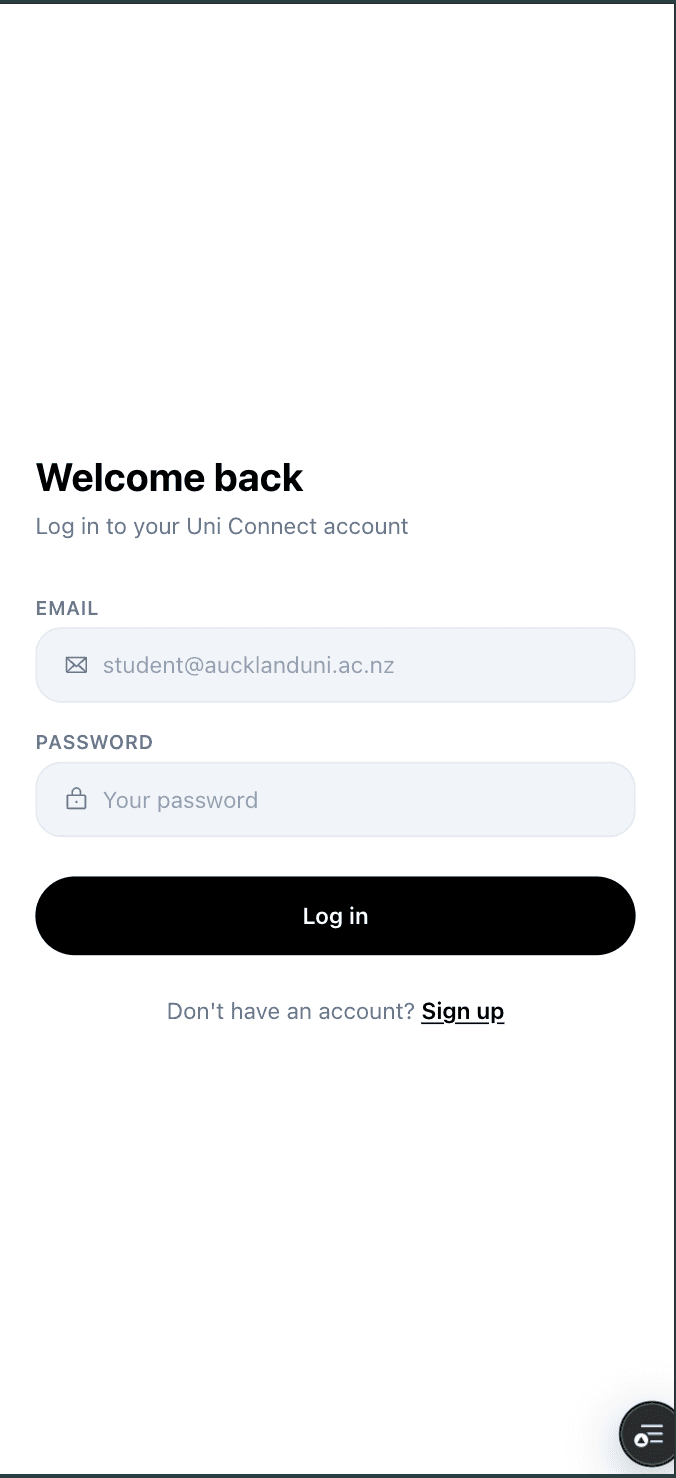
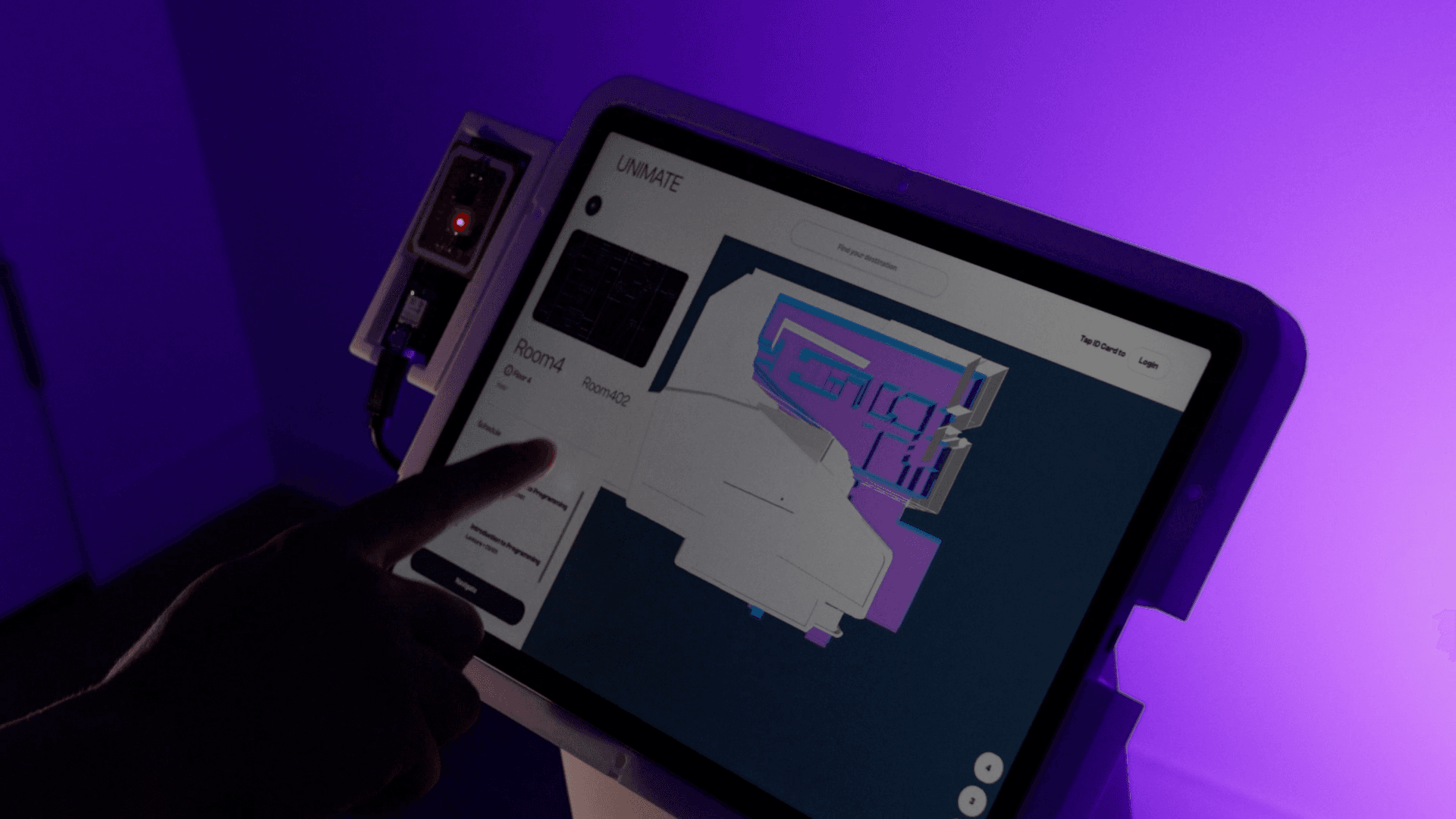
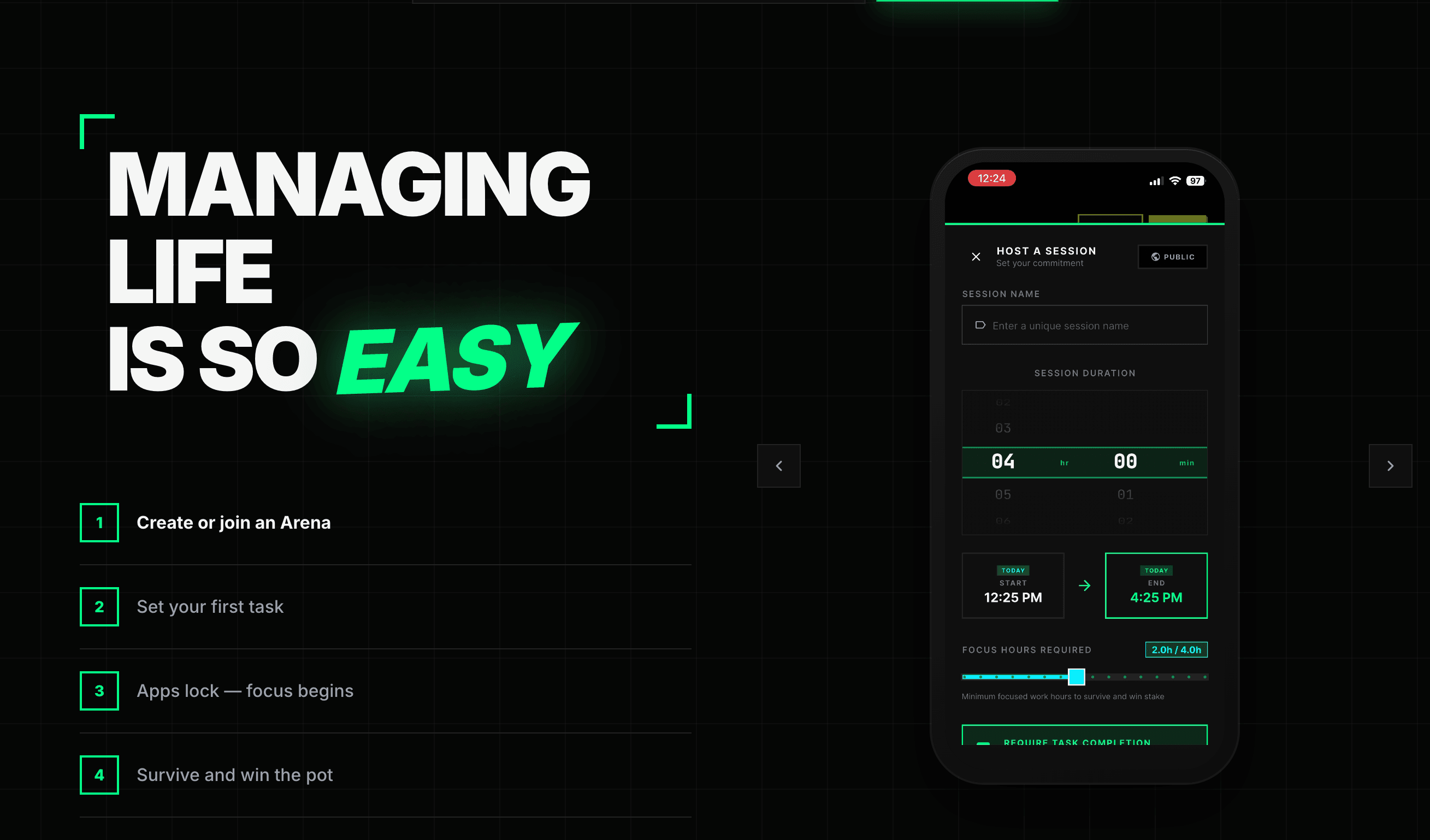
A selection of projects I've built — apps, games, websites, and physical kiosks.
Part I: Skills and Background
My skillset sits at the intersection of design and engineering. On the design side, I work with Figma for UI/UX, I've done motion graphics work during my internship at Seolseol.com in South Korea, and I have a basic foundation in sketching (though I'll be honest — drawing is still not my strongest area). On the technical side, I work with Vue, Svelte, React, Next.js, Flutter, Django, Python, and Godot Engine. I've also gotten into hardware through 3D printing and microcontroller programming for Unimate.
I'm not the most skilled coder or the most talented artist. But I've learnt that being willing to jump into something unfamiliar and figure it out as I go is a strength in itself. When I had to build a smart lamp with Arduino — detecting human movement, controlling RGB light intensity, connecting it to a full-stack app — I had zero experience with Arduino. I just started, made mistakes, and finished the project. That same attitude is what I want to bring into DES303.
Part II: What I Care About — Happiness, Connection, and Purpose
The reason I build things isn't really about technology. It's about happiness.
I know that sounds broad, but let me explain. I've moved around a lot in my life. Born in Korea, moved houses frequently as a kid, then moved to New Zealand when I was going into Year 6. I lived in Tauranga for a year, started making friends, and then my family moved to the North Shore. Made new friends in intermediate, then moved again to Pakuranga for all of college. Then university. Every time I moved, my friendships reset.
That pattern taught me something: connection is fragile, and loneliness is real. Even now, I notice that I tend to reset my friendships every couple of years, even when I haven't moved anywhere. It's a habit I developed from all that moving, and it's something I'm still working through.
This is why so many of my projects centre on connection and motivation. Uniconnect was built because I saw students struggling with isolation and mental health — I wanted to create an anonymous space where people could support each other. Ticker exists because I realised that staying productive is easier when you're accountable to a group — so I gamified it with real stakes. Even Unimate, a wayfinding kiosk, is about helping people navigate a new environment so they feel less lost and more like they belong.
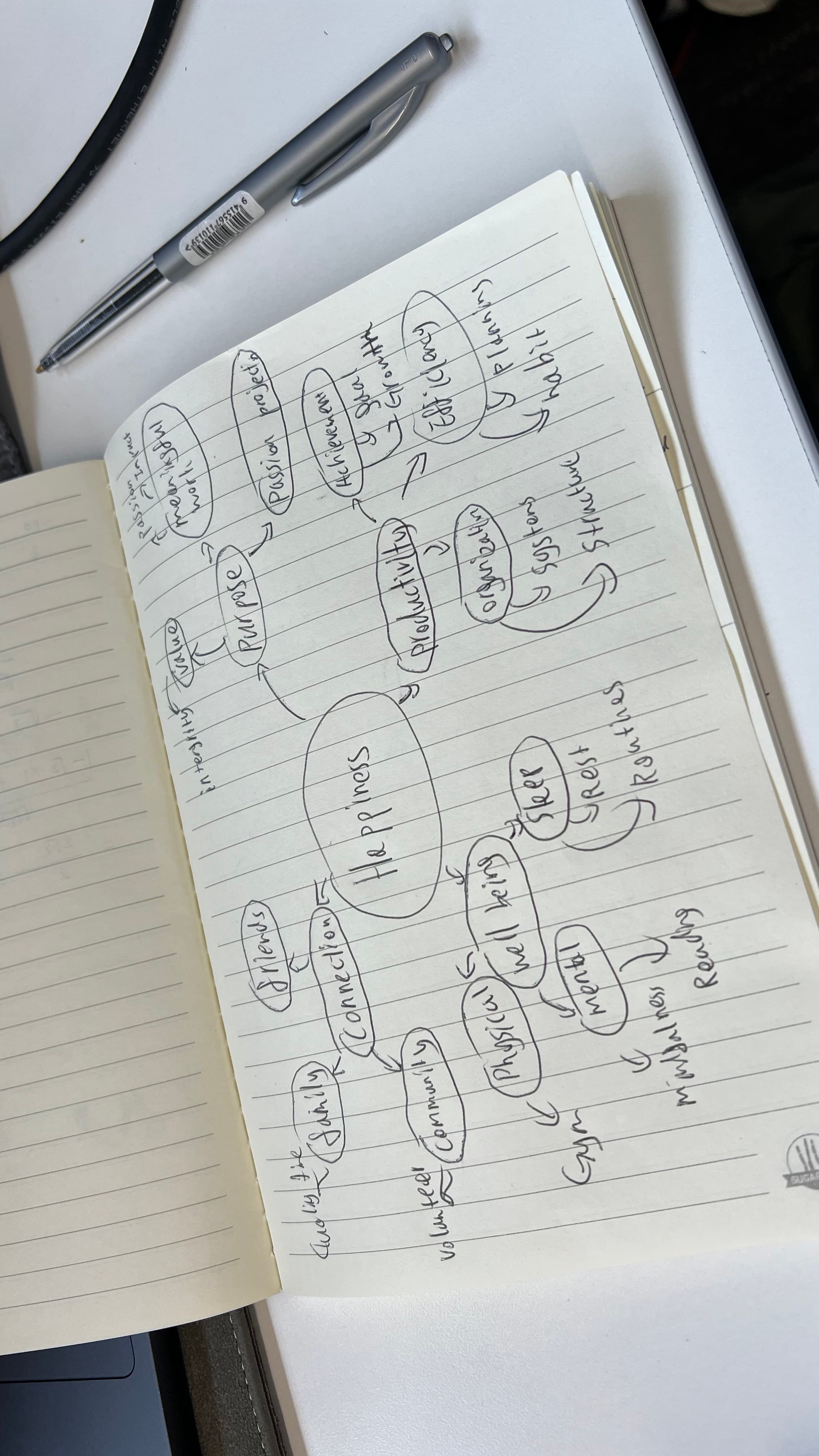
When I think about happiness, I don't think it's just one thing. It's a mix: healthy relationships, a sense of purpose, physical health, mental clarity, spiritual grounding, and the feeling of actually achieving your goals. Everyone's formula is slightly different, but the ingredients overlap. My design work tries to address those ingredients.
Mind map — the themes driving my design work and how projects connect to them.
A big part of where this belief comes from is my faith. I'm a Christian, and my understanding of what that means shapes how I think about design and about people. For me, the core message isn't about salvation in some distant future — it's about love in the present. In the Bible, there are different words for love: agape (unconditional, selfless love), philia (friendship), and others. The one that resonates most with my design thinking is agape — the idea that we are called to genuinely care for each other, not because we get something out of it, but because that's what makes a community work.
I believe that God is love, and that the ultimate goal is something like bringing heaven to earth — not in a supernatural sense, but in the sense that when people start to genuinely respect, support, and work for each other's wellbeing, that's when life starts to feel the way it's supposed to. Happiness isn't something you achieve alone. It happens when people around you are also okay.
This isn't separate from my design work — it's the foundation of it. It's why I volunteer with my church youth group every Saturday, preparing food for homeless people outside Auckland City Library. It's why I built Uniconnect — because I believe nobody should have to suffer through loneliness in silence. It's why I prototyped an app connecting homeless individuals with support facilities. And it's why my core design question keeps coming back to: how do I help people take care of each other?
I don't expect everyone to share my faith, and I'm not designing exclusively for Christians. But this worldview is part of my positionality as a designer. It explains why I keep returning to themes of connection, community, and mutual support — and why I believe that design, at its best, is an act of service.
Part III: Tech Demo Ideation
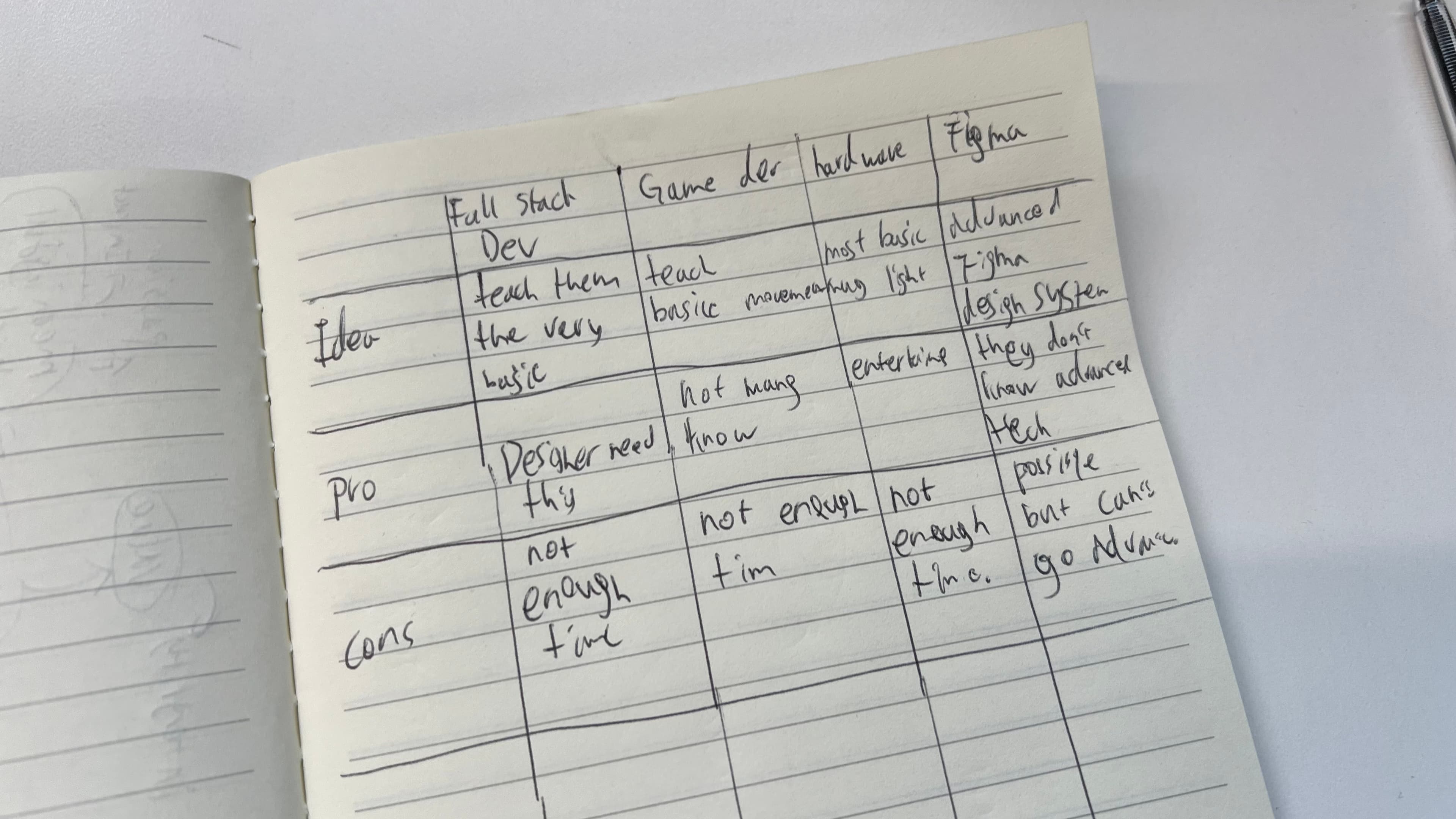
For the Week 3 tech demo, I need to choose a skill to teach my peers in a 15-minute session. I brainstormed several options:
Too complex for 15 min, peers may already know AI tools
Exciting & new for peers, but scope risk is high
Biggest learning stretch, most unique offering
Feasible but feels safe — not challenging enough
Option A: Full-Stack Web Development with AI Integration
I could show my peers how to use AI tools (like Claude or ChatGPT) alongside frameworks like Next.js or Svelte to rapidly build functional web apps. However, a lot of my classmates might already be familiar with AI-assisted coding, and 15 minutes isn't much time to cover a full-stack workflow.
Option B: Game Development in Godot
I have experience leading game projects and won three awards through the UoA Game Development Group. Godot is free, open-source, and more beginner-friendly than Unity. The downside is that game development can get complex quickly, and I'd need to scope it carefully.
Option C: Hardware Prototyping (Arduino / Sensors)
This would push me outside my comfort zone the most. I've done some work with microcontrollers and 3D printing for Unimate, and the Design Lab has sensors available. The risk is that I'm not deeply experienced here, so I'd need to learn more myself before I could teach it confidently.
Option D: UI/UX Prototyping in Figma (Advanced Techniques)
During my internship, I worked extensively with Figma including variables, design systems, and component architecture. But I'm not sure how excited I'd be about this — it feels safe, and I want to challenge myself.
After thinking it through, I'm leaning toward either Game Development in Godot or Hardware Prototyping. Both align with where I want to push my skills this semester, and both would offer something genuinely new to my peers. I'm going to spend the next week testing both options before I commit.
Part IV: Experiment and Capstone Direction — Early Thinking
Looking ahead to my experiments and eventual Capstone, there are a few directions I'm interested in exploring:
I've done a lot of software work, and I don't want to just make another app. I want to create something physical that people can interact with in real space. This could involve sensors, projections, or physical computing.
Whether it's loneliness, lack of motivation, or the difficulty of maintaining friendships, I want my Capstone to tackle something I've personally struggled with. My best work comes from personal frustration.
I want to test my ideas with people around me. If I design for students, I can get real feedback from friends and classmates, iterate quickly, and see whether the thing I'm building actually helps.
How might I help people become happier, more connected, and more satisfied with who they are — using a combination of digital and physical design?
This is still broad, and I'll refine it over the coming weeks. But it gives me a starting direction.
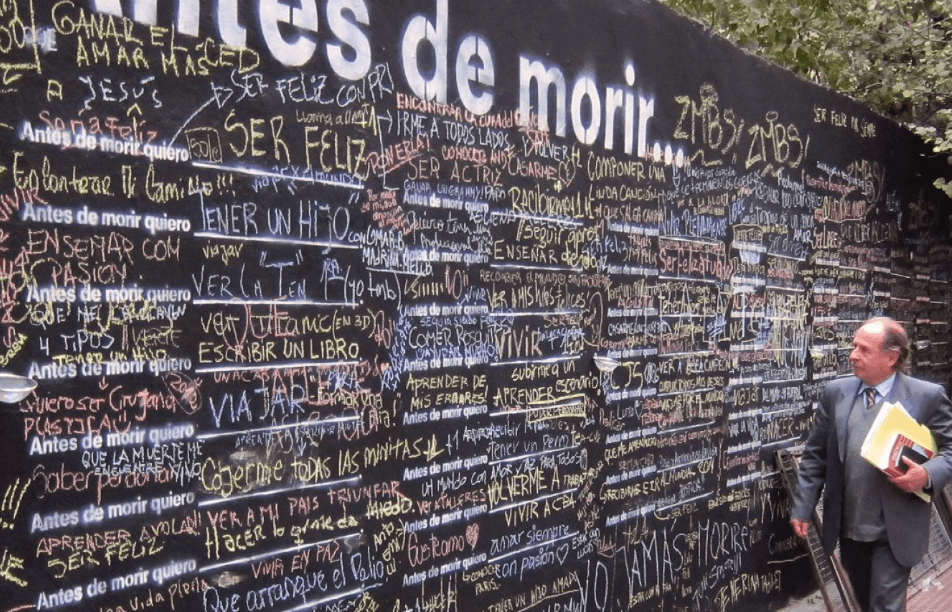
"Before I Die" Wall
Candy Chang (2011) — community interaction through physical public installation
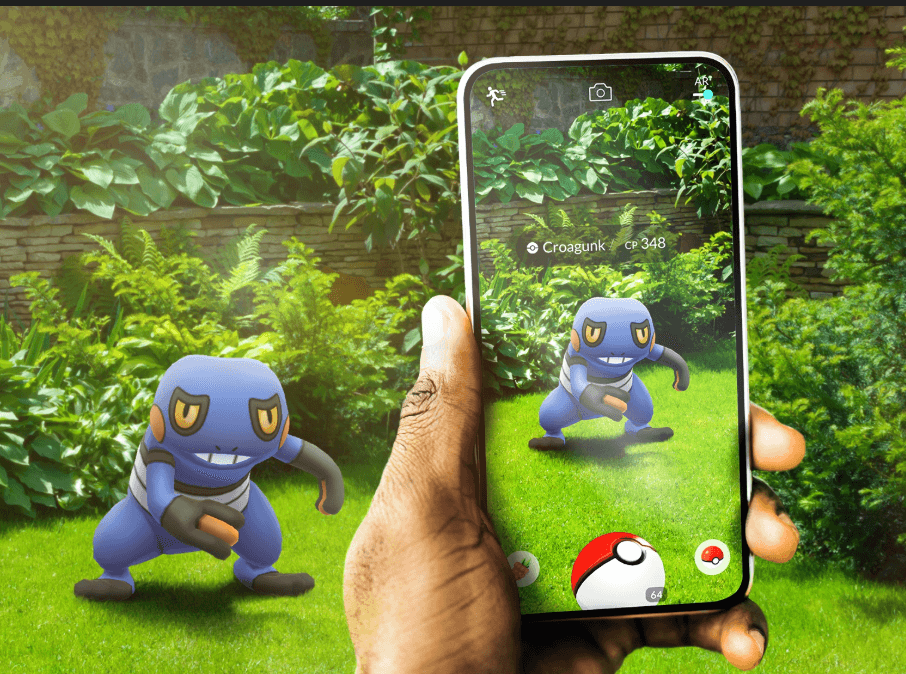
Pokemon Go
Niantic (2016) — digital layer over physical space driving real-world connection
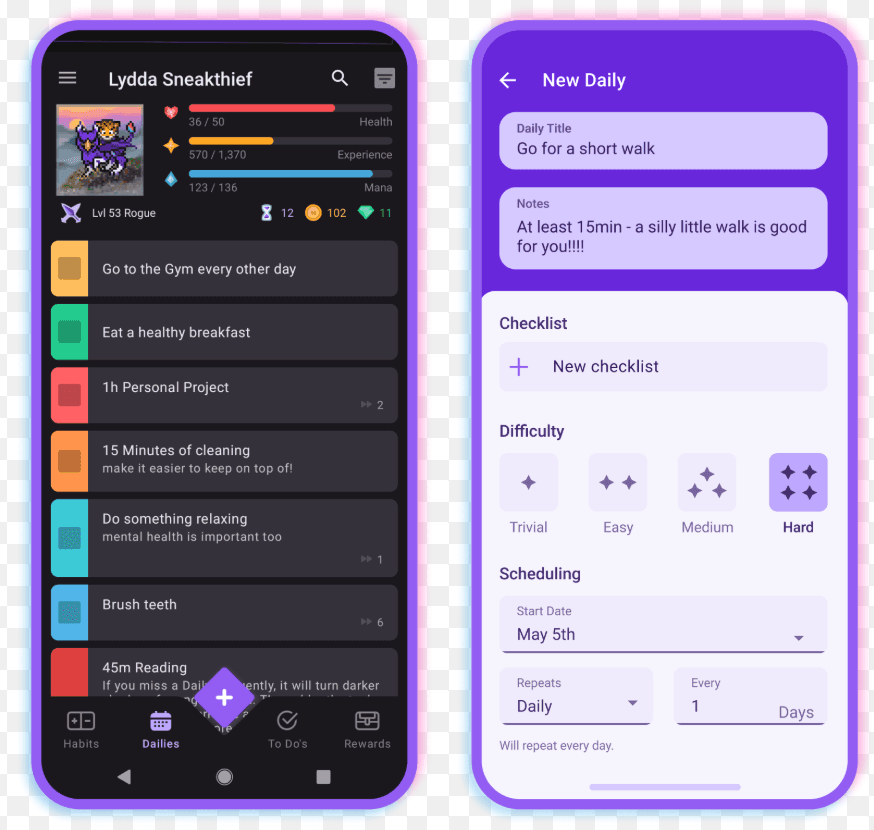
Habitica
Habitica (n.d.) — gamification of habits and productivity through RPG mechanics
Part V: Challenges and Goals
I'm not going to pretend this semester will be easy. I'm juggling a conjoint degree, running multiple startup projects (Unimate is in sales negotiations, Ticker is pending app store publication), and I want to do justice to the Capstone. Time management is going to be the biggest challenge.
I'm also aware that I tend to jump between ideas quickly. I get excited about a new problem, start building, and sometimes move on before finishing. For DES303, I need to be more disciplined about committing to a direction and seeing it through.
I'm feeling excited about this course. For the first time, I have a space to experiment without needing to ship a finished product immediately. That freedom is both liberating and a little intimidating — but I'd rather have too many ideas than none at all.
Next week: I'll reflect on my tech demo preparation using Gibbs' Reflective Cycle, and share early prototypes of whatever direction I commit to.